AI in Schools: The Questions You Can’t Ignore

Let’s be honest. When ChatGPT launched in November 2022, most schools did one of two things: they either panicked and banned it, or they quietly hoped it would go away. Neither strategy worked. Artificial intelligence is now embedded in the daily lives of students across Australia — and the question is no longer whether it will affect your classroom. It already has. The question is what you’re going to do about it.

This is the first of a three-part series on AI in education. Today we’re asking the foundational questions: what exactly is AI, why is this moment genuinely different from previous technology waves in schooling, and what ethical questions does it raise that we simply cannot afford to sidestep? Part 2 will look at how schools are using AI right now — including some confronting examples. Part 3 will explore what a genuinely AI-informed education system could look like in the future.


So What Actually Is AI — and Why Now?

Artificial intelligence refers broadly to computer systems capable of performing cognitive tasks traditionally reserved for humans — perceiving, reasoning, learning, and generating content (Marandi, 2025). What makes generative AI — tools like ChatGPT, Google Gemini, and Microsoft Copilot — genuinely new is its ability to produce original text, images, code, and ideas in response to natural language prompts. You don’t need to know how to code. You just talk to it.

Previous technology waves in education — the overhead projector, the computer lab, the interactive whiteboard, the iPad — all shared a common characteristic: they were tools that humans used to do things. AI is different. It can do things on behalf of humans. It can write the essay, solve the maths problem, generate the rubric, mark the work, and provide feedback — all before the teacher has opened their laptop. That is not an incremental change. That is a structural one.

It is also moving with extraordinary speed. Australia’s Education Ministers endorsed the 2024 Framework Review for Generative AI in Schools in June 2025, making the Australian Framework for Generative AI in Schools the national blueprint for responsible classroom use. The framework itself — first launched just in October 2023 — has already required annual updates to keep pace with new developments. No previous educational technology has required a national policy framework within twelve months of becoming publicly available.

What Makes This Different from Every Other “Tech Revolution”?

Teachers who have been in the profession for more than a decade have lived through multiple rounds of “this technology will transform education.” The computer lab. Web 2.0. The 1:1 iPad program. Flipped learning. MOOCs. Each arrived with enormous promise and significant hype. Most were eventually absorbed into schools in modest, useful ways — or quietly abandoned.

So why should AI be any different? Here are three reasons it genuinely is.

First, the access barrier is essentially zero. Every previous technology required infrastructure — hardware, software licences, technical support, training. Generative AI tools are free, available on any device with an internet connection, and require no training to use at a basic level. A Year 6 student in a regional Queensland school can access the same AI capability as a student at an elite private school in Sydney. This is simultaneously AI’s greatest democratic promise and its most complex equity problem — a point we’ll return to shortly.

Second, it operates inside the learning process itself. Previous technologies were largely about accessing or presenting content. AI can participate in the cognitive work of learning — drafting, revising, explaining, questioning, assessing. Large language models capable of generating human-quality text and creative content have blurred the lines of authorship and academic integrity, giving students unprecedented access to tools capable of completing assignments, writing essays, and solving complex problems with minimal personal effort.

Third, it is evolving faster than education policy can follow. The implicit biases, inaccuracies, lack of transparency, and potential disruption to traditional learning and teaching posed by AI means that understanding how to set responsible and ethical policy is not necessarily obvious. By the time a school develops a considered AI policy, the technology it was written about has already changed significantly.

“Free access to powerful generative AI in schools has left educators and system leaders grappling with how to responsibly respond to the consequent challenges and opportunities this new technology poses.” — Bower et al., 2025, The Australian Educational Researcher

The Equity Question Nobody Wants to Answer

Here is the uncomfortable truth at the heart of AI in education: not all students will benefit equally, and without deliberate intervention, AI is likely to make existing educational inequalities worse, not better.

Consider what “free access” actually means in practice. A student with a reliable device, a fast internet connection, a quiet space to work, and a parent who can help them think critically about AI outputs is in a fundamentally different position from a student in a remote community with intermittent connectivity, a shared device, and no adult at home who has heard of ChatGPT. There are massive inequities in access to digital technologies throughout Australia, which mirrors global trends, and the way for education systems to provide all students with access to the benefits that AI might provide at the same time as safeguarding them against the risks is deeply uncertain.

The OECD’s 2024 working paper on AI and equity in education puts it plainly: AI adoption in education risks exacerbating existing disparities, and there is an urgent need to address privacy and ethical concerns, enhance cultural responsiveness, and provide continuing professional learning in AI to ensure AI supports a more equitable and inclusive learning environment.

For First Nations students and communities, the stakes are even higher. The Australian National AI Plan 2025 acknowledges that AI has manifested harms to First Nations people, including through perpetuating harmful stereotypes and the use, misattribution and falsification of First Nations cultural and intellectual property. Schools working with Aboriginal and Torres Strait Islander students have an obligation to consult with communities about AI use and to implement cultural protocols that respect Indigenous data sovereignty.

🔍 The Hard Questions Every School Needs to Answer
  • Do all of our students have equitable access to AI tools — in school and at home? If not, what are we doing about it?
  • What data about our students is being collected by AI platforms we’re using? Who owns it? Where is it stored? Have parents consented?
  • Are the AI tools we’re using culturally responsive? Do they reflect and respect the diversity of our student community?
  • What happens when a student without home internet access is competing with peers who used AI tools to complete the same assessment? Is that fair?
  • Who in our school is responsible for monitoring AI’s impact on student learning and wellbeing? Is anyone?

Who Is Watching? Research, Monitoring, and Accountability

One of the most honest things we can say about AI in education right now is that we don’t yet know enough. The technology arrived faster than the research could follow, and schools are being asked to make consequential decisions about its use without the evidence base that normally informs good educational policy.

There are some significant efforts underway. The OECD is actively researching AI’s impact on equity and inclusion. The Australian Government’s National AI in Schools Taskforce produced the national framework and conducts annual reviews. Researchers at Macquarie University, the University of Sydney, Monash, and the University of Newcastle are all actively publishing in this space. State-level developments include NSW’s EduChat and South Australia’s EdChat — government-built AI tools that may eventually replace commercial platforms in schools, giving governments far greater control over the data environment and the nature of AI interactions with students.

But there are also significant gaps. School students are younger, more vulnerable, and less equipped to critically evaluate AI outputs than university students. The potential harms — to wellbeing, to academic development, to equity — are arguably greater in K-12 than in higher education, yet the schools framework remains an aspirational document with limited regulatory teeth. We are, in many respects, running a large-scale experiment on children without fully understanding the variables.

Ban It or Embrace It? Why Both Are Wrong

The instinct to ban AI in schools is understandable. It feels protective. It feels like maintaining standards. And there are genuine risks worth taking seriously — academic integrity, cognitive offloading, data privacy, and the very real possibility that students are producing AI-generated work that neither they nor their teachers have learned anything from.

But banning AI in schools does not make it disappear from students’ lives. It simply pushes its use underground, removes any opportunity for schools to teach critical and ethical AI literacy, and — crucially — leaves students unprepared for a world in which AI fluency is rapidly becoming a foundational employment skill.

Equally, uncritical embrace of AI as an educational solution misses the point. A case can and has been made that AI has no place in education, and there may be some validity to this argument — these technologies were not developed for educational purposes and, in many ways, conflict with the values and purpose of education. The answer is neither ban nor blanket adoption. It is something harder: informed, principled, equity-conscious integration — guided by a clear understanding of what we are trying to achieve for every student.

That work starts with teachers. And it starts with conversations exactly like this one. In Part 2 of this series, we’ll look at what is actually happening in Australian and international schools right now — including some examples that will make you think, and some that might keep you up at night. Our earlier post on teaching strategies and active learning is also worth revisiting as you think about how AI changes the pedagogical landscape.

“The questions we should be asking about AI in education are not primarily technological. They are human. What is education for? Who does it serve? And what kind of future are we preparing children to inhabit?” — Adapted from Holmes et al., 2023

💬 Your Turn! What’s your school’s current position on AI — banned, embraced, or somewhere in between? And do you think that position is working? Share your experience in the comments — this is one of the most important conversations in education right now.

References

Bower, M., Hedberg, J., Kuswara, A., & Dalgarno, B. (2025). What generative artificial intelligence priorities and challenges do senior Australian educational policy makers identify (and why)? The Australian Educational Researcher. https://doi.org/10.1007/s13384-025-00801-z

Holmes, W., Porayska-Pomsta, K., Holstein, K., Sutherland, E., Baker, T., Shum, S. B., Santos, O. C., Rodrigo, M. T., Cukurova, M., Bittencourt, I. I., & Koedinger, K. R. (2023). Ethics of AI in education: Towards a community-wide framework. International Journal of Artificial Intelligence in Education, 32, 504–526. https://doi.org/10.1007/s40593-021-00239-1

Lodge, J. M., Bower, M., Gulson, K., Henderson, M., Slade, C., & Southgate, E. (2025). Australian Framework for Artificial Intelligence in Higher Education. Australian Centre for Student Equity and Success. https://www.acses.edu.au

Marandi, R. (2025). Addressing student use of generative AI in schools and universities through academic integrity reporting. Frontiers in Education, 10. https://doi.org/10.3389/feduc.2025.1610836

National AI in Schools Taskforce. (2023, updated 2024). Australian Framework for Generative AI in Schools. Australian Government Department of Education. https://www.education.gov.au

Varsik, S., & Vosberg, L. (2024). The potential impact of artificial intelligence on equity and inclusion in education. OECD Artificial Intelligence Papers, No. 23. OECD Publishing. https://doi.org/10.1787/15df715b-en

Why “Good Job!” Isn’t Good Enough Feedback

We’ve all written it. That encouraging red-pen scrawl at the bottom of a student’s work: “Well done! Keep it up!” It feels kind. It feels supportive. But here’s the uncomfortable truth — it tells the student absolutely nothing about how to improve. And if improving is the point of education, we might need to rethink our feedback habits.

John Hattie and Helen Timperley’s (2007) landmark paper on feedback remains one of the most cited works in education research for good reason. They found feedback has an average effect size of 0.73 on student achievement — making it one of the most powerful influences on learning. But — and this is crucial — the type of feedback matters enormously. Vague, evaluative feedback (“good work”) has minimal impact. Specific, actionable feedback changes everything.


The 3 Feedback Questions Every Student Needs Answered

Hattie and Timperley’s model centres on three fundamental feedback questions. Every piece of effective feedback should address at least one of these:

🎯 The Three Feedback Questions
  • Where am I going? (Feed up) — What is the learning goal? What does success look like?
  • How am I going? (Feed back) — How is my current performance relative to that goal?
  • Where to next? (Feed forward) — What specific action will help me improve or extend my understanding?

Most teacher feedback addresses only the second question — and often vaguely. The most underused is the third: feed forward. This is where the real learning lives. For a broader overview of how feedback sits within the assessment cycle, see our earlier post on understanding assessment for, as, and of learning.

Written Feedback: Making Every Minute Count

Let’s be honest — marking 28 books on a Friday night is a special kind of exhaustion. So the question isn’t just “what makes feedback effective?” but “how do we make it sustainable?” Here are three approaches that work in real Australian classrooms. And if you’re still building your broader formative assessment toolkit, that earlier post is worth a read alongside this one.

1. The 2 Stars and a Wish. A classic for good reason. Two specific, evidence-based positives (“Your use of the word ‘cascade’ to describe the waterfall was a beautiful word choice — it sounds like what it describes”) and one specific, achievable next step (“Now try beginning your next sentence with a different sentence starter — can you avoid starting with ‘The’?”). Quick to write. Clear for students.

2. Coded Feedback + Class Discussion. Instead of writing the same comment 20 times, develop a simple code. Underline powerful word choices in green. Circle punctuation errors in orange. Then have a five-minute class debrief where you address the patterns you saw across the whole class. Targeted, efficient, and the group discussion deepens understanding.

3. Verbal Feedback Stamp. A rubber stamp that says “Verbal Feedback Given” or a VF notation in your mark book. Stop and have a one-minute conversation with the student — face-to-face feedback is often more powerful than written feedback anyway. This counts as rich assessment evidence under AITSL standards.

Peer Feedback: Don’t Underestimate the Power of 9-Year-Olds

Peer feedback, when taught explicitly, can be extraordinarily powerful — and it’s directly aligned with the Australian Curriculum’s Personal and Social Capability strand. But the key word is taught. You cannot simply say “swap books and give each other feedback.” Students need sentence starters, they need a clear rubric or checklist, and they need to practise in low-stakes situations before applying it to valued work.

A simple scaffold: “I noticed that your writing… [observation]. This worked well because… [explanation]. One thing that might make it even stronger is… [suggestion].” Model it. Practise it together. Then watch students take genuine pride in helping each other grow.

The Feedback Loop: Closing the Circle

Here’s the question most teachers forget to ask: did the student actually act on the feedback? Dylan Wiliam (2011), whose work on formative assessment is widely used in Australian schools, argues that feedback only improves learning when students have the opportunity to use it. If you mark work on Friday and move on to a new topic Monday, the feedback loop never closes. Build in “feedback response time” — even 10 minutes at the start of the following lesson where students read, reflect, and act on your comments.

“The most important thing about feedback is what happens next. If nothing changes, it wasn’t feedback — it was just a comment.” — Adapted from Wiliam, 2011

A Final Note for Preservice Teachers

When you’re observed on prac, assessors are looking for evidence of AITSL Standard 5: Assess, provide feedback and report on student learning. They want to see that your feedback is purposeful — connected to your learning intentions, specific to the student, and genuinely designed to move their learning forward. “Good work!” won’t cut it. A targeted, warm, specific comment? That’s the mark of a reflective, professional teacher.

When it comes to designing tasks that make feedback truly meaningful, it’s also worth reading our post on creating a performance of worth — summative tasks that give students something genuinely worth their best effort, and give you something genuinely worth your best feedback.

💬 Your Turn! What’s your go-to feedback strategy? Have you tried coded feedback or verbal feedback stamps? We’d love to hear what works in your classroom — share in the comments below!

References

Australian Institute for Teaching and School Leadership (AITSL). (2018). Australian Professional Standards for Teachers (Standard 5). https://www.aitsl.edu.au/teach/standards

Black, P., & Wiliam, D. (1998). Assessment and classroom learning. Assessment in Education: Principles, Policy & Practice, 5(1), 7–74. https://doi.org/10.1080/0969595980050102

Clarke, S. (2008). Active learning through formative assessment. Hodder Education.

Hattie, J. (2009). Visible learning: A synthesis of over 800 meta-analyses relating to achievement. Routledge.

Hattie, J., & Timperley, H. (2007). The power of feedback. Review of Educational Research, 77(1), 81–112. https://doi.org/10.3102/003465430298487

Wiliam, D. (2011). Embedded formative assessment. Solution Tree Press.

You Asked a Great Question – Now What?

Last week we explored the difference between lower-order and higher-order questions — and why the questions we ask signal the depth of thinking we’re demanding from our students. If you missed it, you can read that post here. But there’s a sequel to that conversation that doesn’t get nearly enough attention: what do you actually do with the answers?

Asking a great HOTS question is only half the job. The other half — the half most of us were never explicitly taught — is reading what those responses tell you in real time, and having both the skill and the confidence to change direction when the room is telling you something isn’t landing. Think of it like a football coach at three-quarter time: the game plan was perfect on paper, but the scoreboard is telling a different story. Great coaches adjust. Great teachers do too.


Why “Pushing Through” Costs More Than You Think

Be honest: how many times have you been twelve minutes into a lesson — one you spent two hours planning — and sensed the room slipping? Eyes glazing. The same three hands going up again and again. Bodies turning sideways. And you kept going anyway, hoping it would click by the end?

Most of us have. The instinct to push through is understandable — you’ve planned this, the content needs covering, and pivoting mid-lesson can feel like losing ground. But the research tells a clear story about what we’re sacrificing when we do.

Black and Wiliam’s landmark 1998 review of over 250 studies established that improving the quality of in-class, moment-to-moment assessment substantially raised student achievement — far more than end-of-unit tests or term benchmarks. The greatest lever on learning, they found, is what happens between teacher and student inside the lesson, right now. Wiliam (2011) later gave this a name: “contingent teaching” — instruction that is genuinely responsive to what students are doing, rather than proceeding through a predetermined script regardless of what’s actually happening in the room. It is the opposite of pushing through.

John Hattie’s Visible Learning synthesis reinforces the point, placing formative evaluation at an effect size of 0.90 — nearly double the threshold he considers educationally meaningful (Hattie, 2009). The critical caveat, as both Hattie and Wiliam emphasise, is that information you collect but don’t act on is just noise. Reading the room is what transforms that information into learning.


“Teachers need to know about the learning, and they need to know about it while it is still happening, while there is still time to do something about it.” — Wiliam, 2011, p. 50

What “Reading the Room” Actually Looks Like

Reading the room is not a mysterious sixth sense that experienced teachers develop after decades in the classroom. It is a set of observable, learnable signals — and like any professional skill, it sharpens with deliberate practice. Here are the four most reliable ones to watch for, with questions at the heart of each:

🔍 The 4 Signals to Watch For
  • Participation patterns. Who is answering your questions? If the same three students are carrying every response, the other 25 are passengers — not learners. Equity of voice is a real-time diagnostic. When only a handful of students are engaged, the rest have quietly checked out.
  • Body language clusters. One student leaning back is a data point. Five students leaning back simultaneously is a trend worth acting on. Train yourself to scan for clusters, not outliers — the pattern across the room is what matters.
  • The nature of student questions. When students are genuinely with you, their questions push the learning forward — they want to know more, go further, explore the edges. When they’re lost, their questions go backward — asking you to repeat what you just said, or falling silent altogether. In an Australian primary classroom, prolonged silence in response to a question is rarely a sign of deep thinking. It usually means students have stopped trying to keep up.
  • The gap between expected and actual output. You asked for three sentences applying a new concept. Most students wrote one sentence restating the definition. That gap between what you anticipated and what arrived on the page is perhaps the most reliable signal of all — and it pinpoints precisely where the thinking broke down.

Planning for the Pivot Before You Walk In the Door

Here’s a planning insight that changes everything: most lesson plans are written entirely around success. Here’s the hook, here’s the content, here’s the activity, here’s the close. Very few lesson plans include the equally important contingency: if this isn’t landing, here is what I will do instead. If you’d like to revisit the fundamentals of lesson planning, our earlier post on planning the teaching-learning cycle is a great starting point.

The fix is not complicated. Before each lesson, spend three minutes identifying one or two simple moves you can make if the room signals confusion. Not dramatic overhauls — small, targeted adjustments that take two to three minutes and redirect the learning without abandoning the lesson entirely. Dylan Wiliam (2011) refers to this kind of prepared responsiveness as a hallmark of truly expert teaching, and it is a skill that can be built systematically. Here are three go-to moves worth having in your toolkit:

⏸ 3 Mid-Lesson Pivot Moves
  • Move 1 — Turn and Talk with Purpose. Stop the delivery. Give students two minutes to turn to a partner and share: what makes sense so far, and what’s still fuzzy? This is not casual chat — you circulate and listen. What you overhear in those two minutes tells you exactly where to pick back up and what needs re-teaching. It’s Think-Pair-Share with a diagnostic purpose built in, and it re-engages students who have drifted by giving them a low-stakes way back into the learning.
  • Move 2 — The Single Diagnostic Question. This is where your Blog 1 toolkit pays off directly. Pose one carefully chosen HOTS question that requires students to apply what you’ve just taught — not recall it. Crucially, ask students to write their answer before anyone shares aloud. Mini whiteboards are ideal: every student holds up a simultaneous response and you scan the room in under ten seconds. You are not looking for the right answer — you are looking for the pattern in the wrong answers, because that pattern reveals precisely where understanding broke down and where your next teaching move needs to target.
  • Move 3 — Back Up and Re-Enter. When you recognise that the room is genuinely lost, resist the urge to push forward faster or layer more explanation on top of existing confusion. Instead, mentally rewind: identify the last point in the lesson where students were demonstrably with you, back up to that point, and re-enter it with a different approach — a concrete example, a visual, a brief hands-on activity, a different analogy. This takes real confidence, because it feels like losing ground. It is not. Pressing on over a shaky foundation is what loses ground.

What This Looks Like in an Australian Primary Classroom

You’re mid-way through a Year 4 HASS lesson on how laws are made in Australia. You’ve explained the legislative process and now you throw out the HOTS question from your board: “If you disagreed with a new law, what could you do about it — and which option do you think would be most effective, and why?” Students write their responses on mini whiteboards and hold them up.

You scan the room in ten seconds. Almost everyone has written some version of “vote.” Barely anyone has mentioned advocacy, community campaigns, petitions, protest, or contacting their local Member of Parliament. The content went in — but the thinking hasn’t gone deep enough yet.

That’s your signal. You don’t push to the next slide. Instead, you put a real example on the board — perhaps the long campaign by Indigenous Australians and their allies to change the date of the national public holiday — and ask: “What did people actually do here? Which of these strategies seemed to make a difference, and why?” You’ve backed up, re-entered at the right level, and now the HOTS question has genuine traction. The adjustment took three minutes. The depth of learning it unlocked was worth every second.

Building It Into Your Reflective Practice

Like any professional skill, mid-lesson responsiveness gets sharper the more deliberately you practise it. One of the most effective ways to build it is through a brief post-lesson reflection — three questions, two minutes, straight after the bell: At what point did I first notice the room wasn’t with me? What did I do in response? What might I have done differently? Over time, this kind of structured reflection builds pattern recognition. You start noticing the signals earlier. Your pivot repertoire grows. The lag between sensing something is off and doing something about it shrinks — and that is what separates responsive teaching from reactive teaching.

For preservice teachers, this matters beyond the classroom too. AITSL Standard 3.3 requires that you demonstrate the use of teaching strategies that respond to the learning strengths and needs of students, and Standard 5.4 asks you to interpret student assessment data to evaluate student learning. A diagnostic question mid-lesson, read carefully and acted upon, is live evidence of both — and among the most convincing things an assessor can observe on a prac visit. For a broader toolkit of responsive teaching strategies, see our post on teaching strategies worth having in your repertoire.


“Expert teachers monitor learning constantly and use this information to adjust their instruction. They treat the lesson as a hypothesis to be tested, not a script to be delivered.” — Adapted from Hattie & Yates, 2014

💬 Your Turn! Have you ever deliberately stopped a lesson mid-stream and changed direction? What was the signal that told you it was time? Share your story below — your experience might be exactly what another teacher needs to hear this week!

References

Australian Curriculum, Assessment and Reporting Authority (ACARA). (2023). Australian Curriculum v9.0. https://v9.australiancurriculum.edu.au

Australian Institute for Teaching and School Leadership (AITSL). (2018). Australian Professional Standards for Teachers (Standards 3.3 & 5.4). https://www.aitsl.edu.au/teach/standards

Black, P., & Wiliam, D. (1998). Assessment and classroom learning. Assessment in Education: Principles, Policy & Practice, 5(1), 7–74. https://doi.org/10.1080/0969595980050102

Black, P., Harrison, C., Lee, C., Marshall, B., & Wiliam, D. (2004). Working inside the black box: Assessment for learning in the classroom. Phi Delta Kappan, 86(1), 8–21. https://doi.org/10.1177/003172170408600105

Hattie, J. (2009). Visible learning: A synthesis of over 800 meta-analyses relating to achievement. Routledge.

Hattie, J., & Yates, G. (2014). Visible learning and the science of how we learn. Routledge.

Leahy, S., Lyon, C., Thompson, M., & Wiliam, D. (2005). Classroom assessment: Minute by minute, day by day. Educational Leadership, 63(3), 18–24.

Wiliam, D. (2011). Embedded formative assessment. Solution Tree Press.

Wiliam, D., & Leahy, S. (2015). Embedding formative assessment: Practical techniques for K–12 classrooms. Learning Sciences International.

Stop Talking — Start Questioning: The Art of Higher-Order Questions in Your Classroom

“The quality of a teacher’s questions tells you more about their pedagogy than any lesson plan ever could.”

⏱ 4 min read  ·  Category: Pedagogy / New Teachers

Here’s a moment most of us recognise. You’ve just delivered what felt like a cracking lesson. The kids were (mostly) engaged, you got through your content, and you asked plenty of questions along the way. But when you reflect later, you realise nearly every question you asked had a one-word answer. “What is photosynthesis?” “Who was the first Governor-General of Australia?” “What is 6 times 8?”

Sound familiar? You’re in great company — research consistently shows that the majority of classroom questions teachers ask sit at the bottom of Bloom’s taxonomy: recall and comprehension. And while there’s absolutely a place for knowledge retrieval, if that’s where the questioning stays, we’re leaving enormous learning potential on the table.


What Does the Research Say?

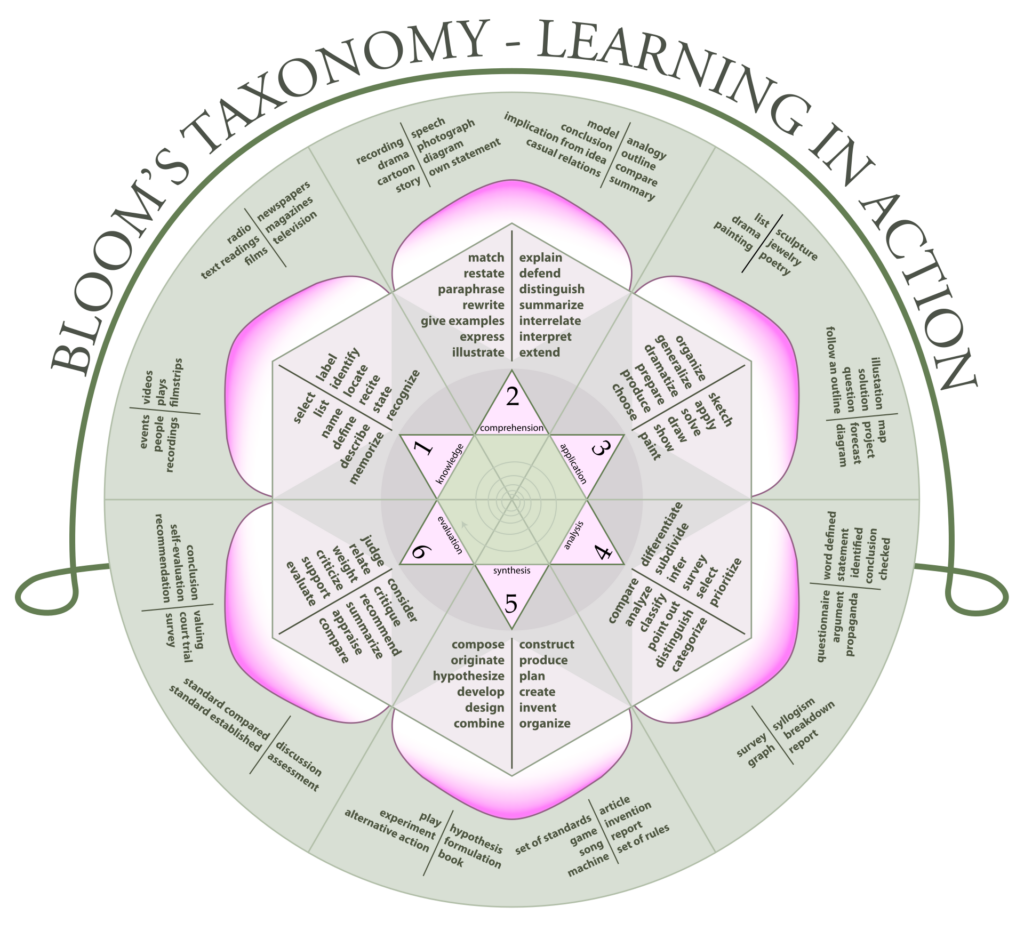
Benjamin Bloom’s taxonomy (1956), revised by Anderson and Krathwohl in 2001, remains one of the most practically useful frameworks in education. The revised model moves from Remembering at the base through Understanding, Applying, Analysing, Evaluating, to Creating at the apex. Higher-order questions push students into the top three levels — and this is where genuine critical thinking happens.

John Hattie’s landmark meta-analysis Visible Learning (2009) reinforced the power of teacher-student dialogue, finding that classroom discussion and questioning strategies have a significant effect on student achievement. More recently, Fisher and Frey (2014) describe “purposeful questioning” as a cornerstone of their gradual release of responsibility model — where the teacher’s role shifts from information-giver to intellectual provocateur.

“The questions we ask are the thinking we demand. Low questions = low thinking. If we want children to think critically, we need to ask critically.” — Adapted from Bloom et al.

The HOTS/LOTS Shortcut

A quick mental shorthand that works brilliantly in the classroom: LOTS (Lower Order Thinking Skills) vs HOTS (Higher Order Thinking Skills). LOTS questions have predictable, often single-word answers. HOTS questions require students to think, justify, compare, or create. Here’s the key difference in practice:

🔁 Flip Your Questions: LOTS → HOTS

  • LOTS: “What is an ecosystem?” → HOTS: “If a keystone species disappeared from an ecosystem, what do you predict would happen — and why?”
  • LOTS: “When was Federation?” → HOTS: “Was Australian Federation inevitable? What evidence supports your view?”
  • LOTS: “What is a simile?” → HOTS: “How does the author’s use of simile in this passage change how you feel about the character?”
  • LOTS: “What are the states of matter?” → HOTS: “Design an experiment that would demonstrate all three states of matter to a Year 3 class.”

3 Practical Strategies to Try This Week

1. The Parking Lot Question. Write a big, juicy HOTS question on the board at the start of the lesson — even before you’ve taught the content. Tell the students this is where you’re heading. It primes their brains, creates cognitive dissonance, and builds anticipation. Revisit it at the end.

2. Question Stems on a Lanyard Card. Create a small reference card of question stems aligned to each level of Bloom’s. Laminate it and keep it with you. When you feel yourself defaulting to LOTS questions, glance at the card. Stems like “How would you justify…”, “What is the relationship between…”, “How could you redesign…” are gold.

3. Wait Time. This is perhaps the single most powerful — and most underused — questioning technique. After asking a HOTS question, wait at least 5–7 seconds before accepting responses. Research by Mary Budd Rowe (1986) showed that extending wait time increased the length and quality of student responses dramatically. Silence is not failure — it’s thinking.

https://commons.wikimedia.org/wiki/File:Blooms_rose.svg


A Note for Australian Teachers

The Australian Curriculum’s General Capabilities — particularly Critical and Creative Thinking — explicitly require students to pose questions, consider alternatives, and evaluate evidence. Embedding HOTS questioning into your daily practice isn’t an add-on; it’s directly aligned with what ACARA expects. It also prepares students for NAPLAN reading and writing tasks that increasingly demand inferential and analytical thinking rather than simple recall.

💬 Your Turn! What’s your favourite HOTS question stem? Drop it in the comments below — let’s build a shared bank of great questions for Australian classrooms!

References

Anderson, L. W., & Krathwohl, D. R. (Eds.). (2001). A taxonomy for learning, teaching, and assessing: A revision of Bloom’s educational objectives. Addison Wesley Longman.

Australian Curriculum, Assessment and Reporting Authority (ACARA). (2023). Australian Curriculum v9.0: Critical and creative thinking. https://v9.australiancurriculum.edu.au

Bloom, B. S., Engelhart, M. D., Furst, E. J., Hill, W. H., & Krathwohl, D. R. (1956). Taxonomy of educational objectives: The classification of educational goals. Handbook I: Cognitive domain. David McKay.

Fisher, D., & Frey, N. (2014). Better learning through structured teaching: A framework for the gradual release of responsibility (2nd ed.). ASCD.

Hattie, J. (2009). Visible learning: A synthesis of over 800 meta-analyses relating to achievement. Routledge.

Rowe, M. B. (1986). Wait time: Slowing down may be a way of speeding up. Journal of Teacher Education, 37(1), 43–50. https://doi.org/10.1177/002248718603700110

I’m so over a KWL

Recently I have been looking at examples of integrated units of work, mostly from preservice teachers. Unfortunately, most of them commence an inquiry unit with a KWL (Know, Want to know and Learned) chart. Now, don’t get me wrong, there is nothing wrong with the occasional use of a KWL chart as an excellent diagnostic assessment of prior knowledge. If you don’t know where the students are at (their prior knowledge) then you could have to go away and spend more solitary evenings revamping your planned unit of work. This post walks through a few genuine alternatives to a KWL chart worth trying instead.

A traditional KWL chart template — Know, Want to Know, Learned

So what are the alternatives to a KWL chart? There are plenty of alternatives out there and I would love to hear from you below to add your favourites. One unit of work was for a Year 5 class about endangered animals and how we can protect them. Instead of a KWL chart, I suggested the following:

I would encourage you to think outside the KWL chart as an initial activity. Instead, could you present the students with a Venn diagram (3 circles) and 3 photos – a koala, a Tasmanian Tiger and an emu and ask them to note the similarities and differences? Hopefully, they will notice the koala is endangered (on the east coast of Australia) and the Tasmanian Tiger is extinct. The pairs/small groups could report back to the larger group and discuss their findings. The Venn diagrams go on display and already you have assessed their prior knowledge and created words for the word wall (endangered, extinct, nocturnal, etc.) 

A Venn diagram activity — one of several alternatives to a KWL chart

More Alternatives to a KWL Chart

Other teachers use a picture book or an image to arouse interest and commence discussions about the topic. The art is in asking probing questions to ascertain prior knowledge. There is not much point in showing a YouTube video before you assess prior knowledge as you have just contaminated their prior knowledge by presenting the information.

What advice would you give beginning teachers to introduce a unit of work/assess prior knowledge without using a KWL chart?

Teaching Strategies

Despite our number of years teaching, whether a novice or a veteran, we are all lifelong learners. We want to improve our “art” of teaching using the latest brain-based learning research and to expand our repertoire of engaging and effective learning strategies. We also need to be able to improvise and use low-tech learning activities on the go! Below is a mix of engaging teaching strategies you can pull out whenever a lesson needs a change of pace.

A bored student — a reminder to mix up your teaching strategies

Although these learning activities are all effective and engaging, their use needs to be moderated. For example, if you always use a KWL chart at the beginning of a unit, no matter how effective the technique is, it will become stale for the students. So, mix it up a bit and try some of the other assessments of prior knowledge activities.

Ten Engaging Teaching Strategies to Try

So, here is a list of suitable teaching/learning activities to try. Some are best suited to the beginning of the lesson, some are for small groups and some are applicable in almost any lesson. Give them a try! If you would like to suggest some more, then please email me.

WHY?WHEN?WHO?
See Think WonderEncourages students to make careful observations and thoughtful interpretationsBeginning / middleIndividually, small group or whole class
Think Pair ShareEncourages students to share and discuss ideas around a problem, issue or topicAnytimeSmall group or whole class
JigsawAssign each group a different aspect of a topic which they research, then they report back to their normal groupMiddleSmall group or whole class
KWLStudents state what they already know, what they want to know and finally what did they learn (self-assessment)Beginning and endIndividually
BrainstormingUseful for generating lots of ideas quickly. Can also be used as a mind-mapping activityAnytimeSmall group or whole class
Chat StationsUseful to generate small group discussion. Students get to move around.Beginning / middleSmall group then the whole class
MindmappingUseful to help students organise and structure complex and related contentBeginning, but can be added to throughoutIndividual or small group
Crumple & ShootUseful review strategy for content and to get the students movingMiddle or endWhole class in small groups
1 Minute PaperHelps students identify misconceptions and provides a diagnostic tool for teachersMiddle or end of a lessonIndividually

A performance of worth

Have you heard of “death by PowerPoint”? I am sure many of us have sat through a professional development session (or maybe a few) where the lecturer (sage on the stage) thought the most efficient way to promulgate their wealth of knowledge was via a PowerPoint presentation. They probably had way too much text on the screen and read most of the text from the screen. PowerPoint was never designed to be used like this. “Less is more” is certainly true when it comes to PowerPoint presentations. PowerPoint was designed to be a visual clue for the presenter to keep on task and also to provide a scaffold for the learner via minimal text on the screen. If in doubt, have a look at most of the presenters at TED Talks.

How many of us are guilty of inflicting “death by PowerPoint” on our students? At the end of the unit of work on multiculturalism, for example, how many of us have asked for the obligatory PowerPoint presentation for the student to demonstrate their knowledge? Don’t get me wrong, an end of the unit presentation is sometimes the best way to demonstrate knowledge … sometimes! In contemporary schools, there are a plethora of ways children can demonstrate their learning, especially using technology. However, that is the scope for another blog one day!

At the end of a unit of work, apart from all the formative assessment learning activities the students have been involved in, there may be a justifiable reason for a summative assessment such as a culminating activity. No, I am not going to suggest a PowerPoint presentation here! A summative assessment, as the name implies, is an “at end of work” or “summary” of their learning. It could be as simple as the “Learn” column on a KWL chart, or as comprehensive as a website the student has created or a performance through the Arts.

Closely aligned with my previous blogs on the “so what of learning” and a “call to action”, I propose we should consider a “performance of worth”. When designing the unit of work sometimes teachers work backwards and plan from the performance of work (summative assessment activity) through all the learning activities required back to the initial learning activity to pique interest and assess prior knowledge.

If you decide a summative assessment is warranted then let us consider what might be a performance of worth. The performance of worth is a double-edged sword. It has “worth” because it is, generally, an important assessment piece to gauge student learning. Secondly, it is of “worth” to the student as they demonstrate their learning. For example, if you have been studying basic electrical circuits in Science, you could give the children a worksheet where they have to identify circuits that would work or not work. Even better, you could ask them to use an app such as Explain Everything and explain why some circuits would not work and how to make them work. Even better and more engaging would be for the student to make a house with lights and alarms that are activated by pressure pads (aluminium strips to connect the circuit). The students would not only demonstrate their knowledge, but also the application of the knowledge which s a higher-order skill (Bloom’s taxonomy). See for example https://www.instructables.com/Electronic-Cardboard-House/

Again, I have nothing against PowerPoint, is used correctly, however, there are far more engaging and higher-order performances students can utilise to demonstrate their learning.

The “so what” of learning

Often teachers spend considerable periods of time devising their own units of work or modifying existing units of work, based on their student needs. After all, we are in the game because we care and we want to see our children grow into active and informed citizens. That’s really what the purpose of learning in the classroom comes down to — not just covering content, but making it matter.

We scour through curriculum documents and whole school planning documents to devise these wonderful and engaging units of work for our children to devour and to learn from. Whether we use more traditional direct instruction or more constructivist inquiry learning pedagogies, the purpose is always the same – to enhance student learning!

We may alert our students to the purpose of the learning by posting our learning intentions at the beginning of the lesson or announcing what we want them to be able to do by the end of the lesson and check this off with an exit ticket. We are alerting their brains to what is to come so they can make connections, hopefully, with existing knowledge and what is to come.

Whether it be at the end of a specific lesson or at the end of a unit of work over several days or weeks, at some point the “penny” must drop of “why are we learning this?” Hopefully, as the teacher and creator of learning activities, the intention and applicability to their lives have been built into the learning activities. Hopefully, along the way, they have realised how they can apply these reading skills in their lives. What about applying Pythagoras’s theorem to their lives? Hmm! Well, we can try!!

A teacher reflecting on the purpose of learning in the classroom

Naming the Purpose of Learning in the Classroom

When creating a unit of work, it is worth considering “Why is this important for my children to learn, to understand or be able to do?” At the end of a unit of work specifically, after a raft of learning activities and the new knowledge and/or skills gained, how will this be of benefit to my students? This is the “so what” of learning. Why have we learned X, Y and Z and how does it impact my life? Will I use this on a regular basis? After all this learning, does it drive or compel me to act in a certain way? Is there a “call to action”?

For example, you have been studying how we celebrate cultural days in Australia (Year 3 ACHASS064) and learned about the important Australian and other cultural days of importance and held a cultural lunch with students and parents. Children can state the important days of celebration in Australia and a few from other countries and the feeling is all warm and fuzzy, especially after that shared cultural lunch. However, “so what” – why did we learn this?

Surely a unit of work on understanding days of significance in Australia not only develops an understanding of ANZAC Day, Christmas Day, etc. but also develops an understanding of other days of significance for cultures represented in our school population. Surely we want the students to develop an understanding of the importance of celebrating important days for ALL people. We want them to develop empathy towards people of all cultures and to respect their days of celebration and commemoration.

So, after the unit of work, apart from the usual PowerPoint of commemorative days around the world and the shared cultural lunch, what is the call to action? Do the Year 3 students note our school calendar only includes Australian days of commemoration? Do they notice we do not have special school assemblies apart from ANZAC Day? How are the other cultural groups represented in our school recognised and their commemorative days celebrated? Perhaps the Year 3s need to write a letter to the Principal encouraging him/her to also include other days of significance on the school calendar. Perhaps the Year 3s could invite the Student Councillors to hear why other days of celebration should be added to the list of assemblies for the year.

It is incumbent upon teachers as creators of learning activities to ensure students know why they are learning this and how it applies to their lives. One way to do this is to think of the “so what” of learning, which may involve a call to action at the completion of the unit of work.

Tips for New Teachers

I must admit I almost gave up teaching in my first year as the reality of 40 Year4 children in a classroom with me as the only adult in the room was too daunting! I found the balance between classroom management and being someone whom the children wanted to learn from a challenge! The real classroom was very different to my highly successful practicum placements when the “real” classroom teacher was in the room with the prac student! These are the tips for new teachers I wish someone had handed me back then. On reflection, I always said my first year was about me getting my head together about how to teach and only in the second year did I begin teaching to be effective. Having said that, after four years of teaching Year 4, I was ready to pull my hair out and wanted a change of grade. Fortunately, I was given a Year 6 class and so my learning of the curriculum grew.

I think my initial “sink or swim” introduction to teaching has always stuck with me and may be the main impetus why my Masters of Education thesis was on developing a more effective induction model for beginning teachers.

Tips for new teachers — coping with first year overwhelm

If you look online there is a plethora of articles and books on advice for first year teachers. “5 Mistakes to avoid as a first year teacher”, “20 things I wish I knew as a first year teacher”, etc. To save you having to glean through all these resources, I have done the job for you and looked for commonalities to make your job easier! Here are my top tips for new teachers, the ones that came up again and again.

5 Top Tips for New Teachers: A First Year Survival Guide

  1. Teaching Philosophy: I suggest spending some time writing adjectives that describe the type of teacher you wish to be. Just write them down on a blank piece of A4 paper without categorising them. Leave this aside on your desk for a few days and as new words come to mind, jot them down. (This process relates to Wallas’ 4 step model of creativity and this allows a period of “incubation”). What should appear is a “collage” of who you wish to become as a teacher and will inform your philosophy of teaching. If you now arrange these adjectives into categories, you will have the draft of a philosophy of education – your teaching style. This will inform HOW you will teach, deal with students, and prioritise what is most important to you.
  2. High Expectations: With the above philosophy of teaching in mind, what expectations will you set for your students? The sage advice would be to keep your expectations high, especially at the beginning of the year. By practising procedures and routines with the children over and over (depending on their age) in the first two weeks of school, you will set the scene for smooth transitions and more effective classroom management. What will your discipline plan be? Is this in concert with the school-wide policy? How will you ensure your classroom management is consistent and fair?
  3. Ask questions: In some schools, you will be assigned a mentor teacher as your “go to” person. You go to them and ask for advice, inquire about procedures, ask about resources in the school, etc. If this is not the case, then you will need to find a teacher whom you respect and would like to emulate and informally have them be your “go to” person. It is the person who you can stick your head into their classroom to ask a question, who can show you how they establish reading groups, or whatever you need to know. Most teachers are caring and sharing people by nature, so this will not be seen as an imposition by them, rather they will be happy to assist.
  4. Organisation is the key: In order to be an effective teacher, you will need to be organised. Not only do you need to have preplanned how children will access all the things they need without having to constantly ask the teacher, but you also need to have all the resources you will need at your fingertips. There are many resources out there for teachers to purchase to help organise their planning documents and similarly, there are plenty of Pinterest pages and blog posts about how to set up your classroom. (This will be a later blog!) You need to have all the things you need to do your job properly at your fingertips – how will you store assessment records? Will you have electronic storage of lessons and plans (e.g. Google Drive)? You will have many tasks to perform and meetings to attend. How will you keep track of all of these – a synced task app/calendar on all your devices?
  5. Be kind to yourself!: There are times when you will experience the highs and the lows of the first year of teaching! Realise you cannot please all the people all the time (including parents). Realise not every lesson needs to be “OTT” (over the top lesson) as this is not sustainable. Similarly, not every piece of student work needs to be marked. When you do spend time planning your teaching program, ensure you have sufficient formative and summative assessment task that relate directly to the assessment of the objectives/outcomes/standards/content descriptors. Being a teacher requires a great deal of “administration” time – whether planning documents at the beginning of each term, marking and grading assessments or writing biannual reports for each child. Set yourself times to work and then reward yourself with mini-breaks as you achieve each small step towards the larget task completion. This might be 5 minutes walking around in the fresh air, or a coffee break, 5 minutes on Facebook or whatever re-energises you! The same applies in each school holiday period – apart from attending to all the home tasks that were not completed during term, you need some downtime as teaching is a physically and emotionally demanding occupation.
The lasting influence of a teacher — encouragement for new teachers

You have chosen to enter the teaching profession for all the right reasons and you want this to be a sustainable career so you can make the most difference to the most students in your care.

The push for STEM

STEM matters in schools because it builds the collaboration, problem-solving and digital skills students will need for jobs that don’t exist yet.

In 2015, all Australian education ministers agreed to the National STEM School Education Strategy 2016–2026, which focuses on foundation skills, developing mathematical, scientific and digital literacy, and promoting problem solving, critical analysis and creative thinking skills. The strategy aims to coordinate current activities, and improve STEM education.

https://www.education.gov.au/support-science-technology-engineering-and-mathematics

STEM is an acronym for Science, Technology, Engineering and Maths. Many countries appreciate the necessity to stimulate innovation and to prepare students for an uncertain future where half of the jobs they will be employed in do not even exist yet, using technologies that have not yet been invented. While this quote is often attributed to Richard Riley, Bill Clinton’s Secretary of Education back in 2006, it is still true today, although some authors now believe we have upped the ante to about 65% of the future jobs have not been invented yet!

How do we, as educators address such a contention? We ned to “future proof” our students, hence the push for 21st century skills such as the 4Cs (Collaboration, Communication Creativity and Critical thinking). We need to prepare our students for an uncertain future by equipping them with the skills to adapt to change and to work together to solve problems and find solutions to global issues through creativity and invention.

Many countries, therefore, have tasked educators to highlight the learning areas of STEM. It is through using pedagogical approaches such as inquiry learning or project-based learning. These pedagogies are found in many of the STEM challenges that pervade the Internet ready for teacher download for their class. However, as teachers, we need to scrutinise, as always, what we are downloading to use with our children. Simply “doing” a STEM activity will not necessarily enhance their 21st-century skills or develop their STEM knowledge or skills.

Why STEM Matters in Schools — What Good STEM Activities Need

In order to be productive and educative, STEM activities need to:

  • provide for a “hands-on” inquiry pedagogical approach to solve an authentic problem;
  • provide opportunities for collaborative work (small groups) and communication;
  • provide practice in the design/engineering process;
  • provide a rigorous scaffolded application of Maths/Science principles and concepts; and
  • provide a climate where mistakes are welcomed and lead to further learning.